Singapore, 30 June 2026 — Timah Partners (“Timah”) today announced the launch of its Specialised Waste Management Platform (“SWP”), a long-term effort to consolidate and transform Singapore’s fragmented specialised waste management industry. The launch is marked by Timah’s signed agreement to acquire an established operator in the sector, which will serve as the platform’s beachhead acquisition.
The platform is guided by a senior advisory board drawn from Singapore’s public sector, built-environment, facilities-management and specialised waste management leadership, and represents a key milestone in Timah’s broader ambition to build a family of essential-B2B platforms under permanent ownership across Southeast Asia.
First acquisition for the platform
Timah has signed an agreement to acquire its first business in the sector, an established operator with over two decades of experience and a strong reputation. The transaction will be the first in Timah’s long-term plan to build scale through acquisition within the specialised waste management industry.
The business’s founder, who has run it since its inception and was seeking the right succession solution, sees Timah’s permanent ownership model as the right long-term home for his staff, customers, and legacy.
“This is the kind of business Timah was built for,” said Kelvin Ho, one of Timah’s CEO Succession Programme (“CSP”) candidates and incoming co-CEO of the business. “It has served Singapore for well over two decades, and the founder and team have built something truly enduring. I am honoured to learn from them, work alongside Timah’s advisors and operating team, and steward that legacy for a long time to come.”
An essential, fragmented and long-overlooked industry
Singapore’s specialised waste industry generates almost S$400 million in annual revenue. Most businesses in this industry are small and owner-operated, and a significant number are facing succession issues as their founders approach retirement with no family member willing to take over. These businesses provide essential, compliance-driven services such as specialised waste collection, sanitation and environmental services, drainage, and grease-trap maintenance, often requiring specialised handling, treatment, and strict licensing.
“These are essential businesses that help keep Singapore clean and safe, and many are run by founders who have spent decades building businesses their customers depend on,” said Dennis Chua, Founder & CEO of Timah Partners. “Individually, each operator is small. In aggregate, this is a sizable and important market. We see an opportunity to build a permanent platform for this overlooked corner of the broader waste industry, giving these SMEs the resources, operational discipline, and long-term home they deserve.”
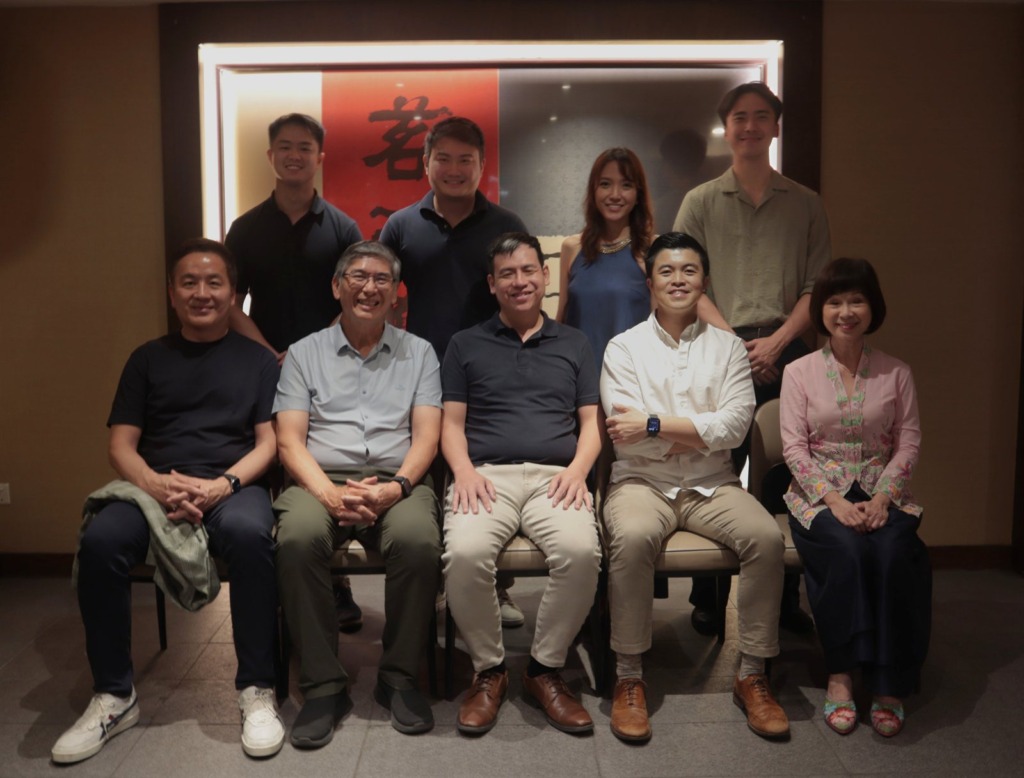
A senior advisory board tailored for the industry
The advisory board brings policy, regulatory, built-environment, capital allocation, and operating judgment directly relevant to the industry.
Dr Amy Khor is a former Senior Minister of State for Sustainability and the Environment, and for Transport, and served as a Member of Parliament for 24 years. In her ministerial roles, she oversaw the regulatory ecosystem relevant to specialised waste, including PUB, Singapore’s National Water Agency, and the National Environment Agency (“NEA”). She brings sustainability policy depth, public-sector navigation, and regulatory context.
Jeffrey Chua is the former CEO of Ascendas Services and a former Senior Managing Director of CapitaLand Singapore, with around four decades of senior leadership across Singapore’s built-environment and facilities-management sector, including Ascendas-Singbridge, CapitaLand, HDB, EM Services, Keppel FMO, and CPG Facilities Management. He brings deep experience in facilities-management operations, IFM channels, workforce planning, and built-environment governance.
Kelvin Wong is the former CEO of the Building and Construction Authority (“BCA”) and a former Executive Vice President of the Economic Development Board (“EDB”), where he spent more than 20 years. His experience spans built-environment governance, manpower and productivity transformation, and public-sector efforts to upgrade essential local industries.
Dennis Chua is the Founder & CEO of Timah Partners, and brings an investor-operator perspective shaped by investing, advisory, and operating experience at Goldman Sachs, 3G Capital, D.E. Shaw, Tiger Management, and Repertoire Partners. His focus includes capital allocation, M&A, corporate governance, business strategy, and long-term market positioning.
A veteran operator from the sector also serves on the board, bringing decades of hands-on operating knowledge, customer relationships, and practical judgment from within the industry.
“We are very grateful to have such an exceptional group of advisors supporting this effort,” said Chua. “Together, they bring a deep understanding of policy, regulation, workforce issues, capital allocation, and the day-to-day operating demands of this industry. That combination is hard to assemble, and it gives the businesses we acquire access to judgment and operating experience that would be difficult for any small operator to build on its own.”
A permanent, buy-and-build model
Timah operates as a permanent holding company. It acquires B2B SMEs with recurring, mission-critical business models and holds them for the long term. Through its in-house CSP, Timah recruits and develops future CEOs to succeed retiring founders and carry these businesses forward. The model is built for decades-long operational stewardship rather than a buy-to-sell cycle, and is specifically targeted at founder-owned businesses where the owners care deeply about their legacy, staff, and customers.
That permanence is funded by evergreen capital. Timah closed a US$50 million Series A in June 2025, backed by founders of iconic holding companies Danaher, TransDigm, and 3G Capital; pioneers of the modern holding-company playbook, Compounding Labs and Sator Grove; and veteran investors from Insight Partners, Norwest, TCV, and Tiger Global.
Specialised waste management fits the Timah approach well: it is compliance-driven, recurring, locally-embedded, with many founder-owned operators facing succession challenges. Timah’s approach is to build scale through acquisition while giving operators the resources, governance, and long-term ownership needed to professionalise without losing what made the businesses work in the first place.
“We do not buy to flip,” said Chua. “We buy to steward what founders have built, protect the people and customers who depend on these businesses, and strive to carry them forward in a way their founders would be proud of.”